The Cheapest Food in the Supermarket Often Comes with the Highest Long-Term Cost
"What will this food cost me—or save me—over the next decade?"
Korir Cherinyit
Tuesday, 16 June 2026
The Cheapest Food in the Supermarket Often Comes with the Highest Long-Term Cost
Here in Kenya, many people judge food by what it costs at the checkout today, not by what it may cost them in hospital bills tomorrow.
Yet the foods people often complain are "too expensive"—quality meat, eggs, fish, avocados, fresh vegetables, and other nutrient-dense foods—are frequently the very foods that help keep them out of the healthcare system.
As a wellness coach,at Keto Diet Champions & Wellness Centre this is one of the concerns I hear most often from clients.
"Healthy food is expensive."
My response is usually simple:
Food has always cost you money.
Many people are eating six, eight, or even ten times a day without giving much thought to the cumulative cost. Between snacks, sugary drinks, fast foods, pastries, chips, and frequent cravings, the food bill quietly grows while hunger never seems to disappear.
When I help clients structure their meals around nutrient-dense whole foods, something interesting happens.
They eat less often.
Their cravings reduce.
Their hunger becomes more manageable.
And in many cases, their overall food spending actually decreases.
The goal is not to buy the most expensive foods. The goal is to buy foods that nourish you well enough that you no longer need to keep eating all day.
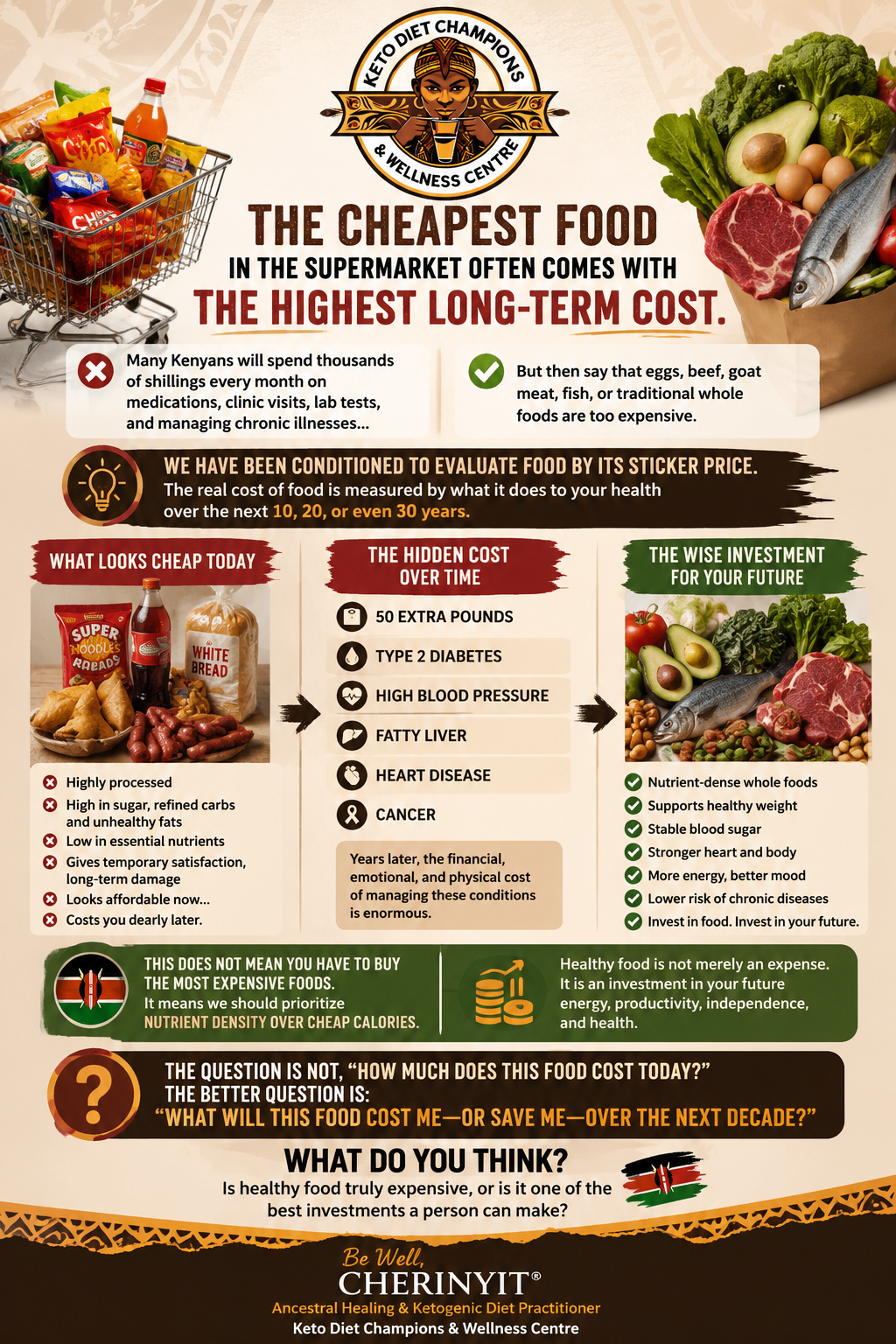
Many Kenyans will spend thousands of shillings every month on medications, clinic visits, laboratory tests, and managing chronic illnesses.
But then say that eggs, beef, goat meat, fish, or traditional whole foods are too expensive.
We have been conditioned to evaluate food by its sticker price.
The real cost of food is measured by what it does to your health over the next 10, 20, or even 30 years.
What appears to be a "cheap" meal today can eventually contribute to:
• Excess weight gain
• Type 2 diabetes
• High blood pressure
• Fatty liver disease
• Heart disease
• Certain cancers
• Reduced quality of life
Years later, the financial, emotional, and physical cost of managing these conditions can be enormous.
This does not mean everyone must buy the most expensive foods.
It means we should prioritize nutrient density over cheap calories.
Healthy food is not merely an expense.
It is an investment in your future energy, productivity, independence, and health.
The question is not:
"How much does this food cost today?"
The better question is:
"What will this food cost me—or save me—over the next decade?"
What do you think? Is healthy food truly expensive, or is it one of the best investments a person can make?
Be Well,
Cherinyit®
Ancestral Healing & Ketogenic Diet Practitioner
Keto Diet Champions & Wellness Centre
Ready to Start?
Book a consultation today
Take the first step toward your health transformation with a KSh 300 consultation.
Book Now →