My Battle with H. pylori: How One Night of Pain Transformed My Approach to Healing
If so many people carry H. pylori, why do only some of us end up with burning gastritis and ulcers?
Elisha Kutto
Saturday, 16 May 2026
It was a normal Friday evening, the usual drive from work back to the village. As was our custom, my colleague and I stopped at Kipsitet for nyama choma before dropping him at Awasi and proceeding home. The meat was delicious, the banter was good, and nothing suggested that this night would become one of the most painful lessons of my life.
I arrived home late, tired and alone. Like most men, I was not in the mood to cook, so I simply went to bed. Hardly had I closed my eyes when I felt it—a sudden burning pain deep in my upper abdomen, as if someone had poured hot charcoal into my stomach. At first, I dismissed it as ordinary indigestion, especially after the heavy meal. But this was different. The pain intensified. Lying down made it worse. I sat up on the bed, holding my stomach, waiting for it to pass. It did not.
Soon my abdomen began to feel tight and distended, like an overinflated balloon. Because of my long-standing history of acid reflux, I always carried antacids and omeprazole either in my bag or the car. I took them quickly, expecting relief. Instead, the pain marched on. Then came the waves of nausea. I stumbled to the sink and vomited violently. That night felt endless—just me, the darkness, and a stomach that felt like it was tearing apart from inside.
Convinced it must be food poisoning, I called a friend who runs a clinic. He was away but told me where to find his house key and asked me to pick antibiotics and more PPIs from the clinic. It was midnight. Every step was torture. The pain came in sharp stitches that almost folded me over. I finally got the drugs, but the moment I swallowed the antibiotics, my body rejected them with more violent vomiting. At that point I knew: this was not “just an upset stomach”; something serious was going on.
By around 4 a.m., I was weak, fully bloated, and could no longer trust myself to drive. I called my brother. That drive to MTRH on the rough road was one of the most painful journeys of my life—each bump felt like a knife being twisted in my gut. I vomited several times before we reached the hospital.
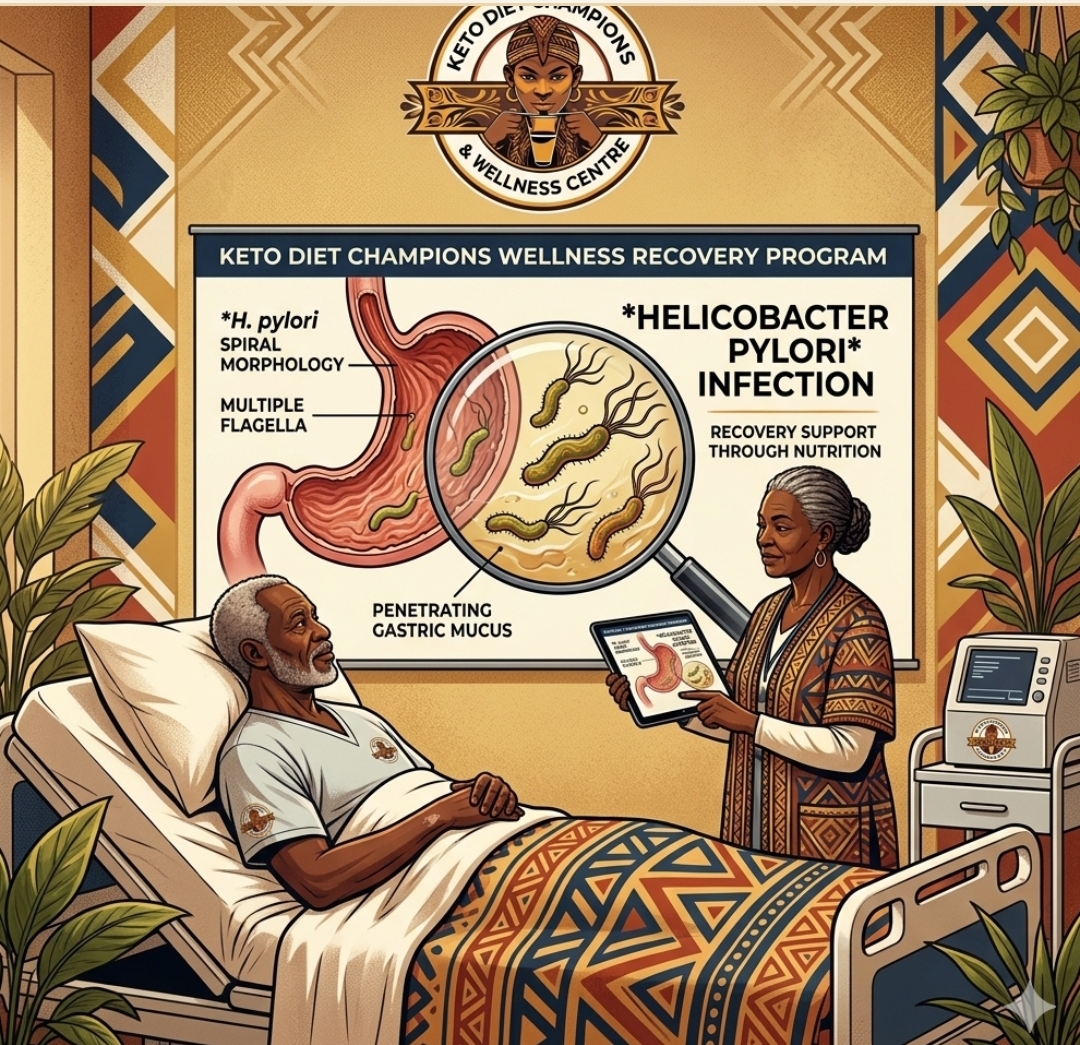
At the emergency department, everything moved fast. Triage, emergency room, IV lines, pain control. When the lab results came back, the diagnosis was clear: Helicobacter pylori infection with severe gastritis. The doctor recommended admission. That was a shock—my first hospital admission ever. Suddenly, I was no longer the health worker advising others; I was the patient lying on the bed.
For five days, my body was flooded with antibiotics and PPIs. Thankfully, I responded, the pain eased, and I was discharged. But the real transformation happened while I was still on that hospital bed. Once the worst pain subsided, the scientist and teacher in me woke up. I began to read deeply about H. pylori—beyond what we learned in medical school.
I discovered that H. pylori is one of the most common human infections worldwide, colonizing the stomach of a large portion of the global population, yet only a minority develop ulcers or cancer. Some researchers even discuss H. pylori as a spectrum organism—sometimes a pathogen, sometimes a harmless colonizer, occasionally even behaving like a symbiont in certain contexts. This raised a big question in my mind:
If so many people carry H. pylori, why do only some of us end up with burning gastritis and ulcers?
This is where the conversation between germ theory and terrain theory became very personal.
• Germ theory (Pasteur and others) emphasizes the microbe. The message is: “The bug causes the disease; kill the bug to cure the disease.” For H. pylori, that means triple or quadruple antibiotic therapy, PPIs, eradication protocols—and truly, in acute crisis like mine, that can be life-saving.
• Terrain theory, on the other hand (linked to thinkers like Claude Bernard and Béchamp), emphasizes the internal environment—our “terrain.” It asks: What is happening in the gut lining, stomach acid, microbiome, immune system, stress levels, diet, and lifestyle that allows this bacterium to shift from quiet colonizer to destructive invader?.
When I combined these two lenses, something clicked.
From a germ theory perspective, antibiotics and PPIs rescued me from a dangerous flare of infection and inflammation. From a terrain perspective, I had to ask myself tough questions:
• What had I been feeding my gut all these years—real food or ultra-processed irritants?
• How long had I been suppressing stomach acid with PPIs, unknowingly weakening one of the body’s natural defenses against pathogens?
• How many times had I ignored the early whispers of reflux, bloating, and discomfort until my body had to scream through this “fire night” in my stomach?
Research shows that H. pylori damages the protective mucus layer, triggers chronic inflammation, and disrupts normal acid balance, but how severe this becomes depends a lot on the host environment—the terrain. A healthy, well-nourished gut with robust stomach acid, balanced microbiota, and low inflammatory load is far less hospitable to disease than an inflamed, sugar-fed, ultra-processed-food terrain.
That is when my clinical understanding joined with my passion for keto and ancestral nutrition.
Many of us carry “bugs” in our bodies—H. pylori, candida, viruses, and many more. We can chase each one with drugs forever, or we can also work on what those bacteria “find” when they come into our system:
• A gut fed with real, nutrient-dense foods, healthy fats, adequate protein, and low refined sugars.
• A stomach with sufficient acid to act as a natural barrier instead of constant acid suppression.
• A microbiome supported by whole foods rather than destroyed repeatedly by unnecessary antibiotics.
• A lifestyle that reduces chronic stress, alcohol overload, and constant snacking—factors that erode the gut terrain.
Today, when I sit with a client battling recurrent H. pylori, chronic gastritis, bloating, or acid reflux, I do not just see lab results; I see my own story. I understand the fear of that burning pain, the frustration of repeated antibiotics, and the confusion when symptoms keep coming back. I also know the hope that comes when you begin to treat the terrain, not just attack the germ.
Through keto and ancestral diet, we focus on:
• Removing the highly refined, inflammatory foods that keep the gut “on fire.”
• Emphasizing simple, traditional, nutrient-dense foods that our grandparents would recognize.
• Supporting stomach acid and digestion instead of routinely suppressing it.
• Allowing the gut lining time and nutrients to heal, so commensal microbes behave and troublemakers like H. pylori have less power over us.
My hospital bed experience with H. pylori was painful, but it became a turning point. It pushed me beyond the “pill-for-every-ill” mindset into a deeper understanding:
The microbe matters, but the terrain decides the story.
At Keto Diet Champions & Wellness Center, we have turned that lesson into a mission—helping champions with gastritis, recurrent H. pylori, and other lifestyle-related conditions rebuild their internal terrain using keto and ancestral principles, backed by science and seasoned with empathy.
Lesson: Take care of your gut with real food, and your gut will take care of you. When we heal the terrain, many “germ problems” begin to lose their power.
If this story resonates with your own struggles with gastritis, acid reflux, or recurrent H. pylori, you are not alone. There is another way—beyond endless medication—where we address the root, not just the flame.
Reach out to us: app.ketodietchampions.co.ke
KuttoKim – Keto & Ancestral Diet Practitioner / Advocate for Ketogenic Lifestyle
Ready to Start?
Book a consultation today
Take the first step toward your health transformation with a KSh 300 consultation.
Book Now →