Gout Is a Metabolic Disease, Not a Meat Disease
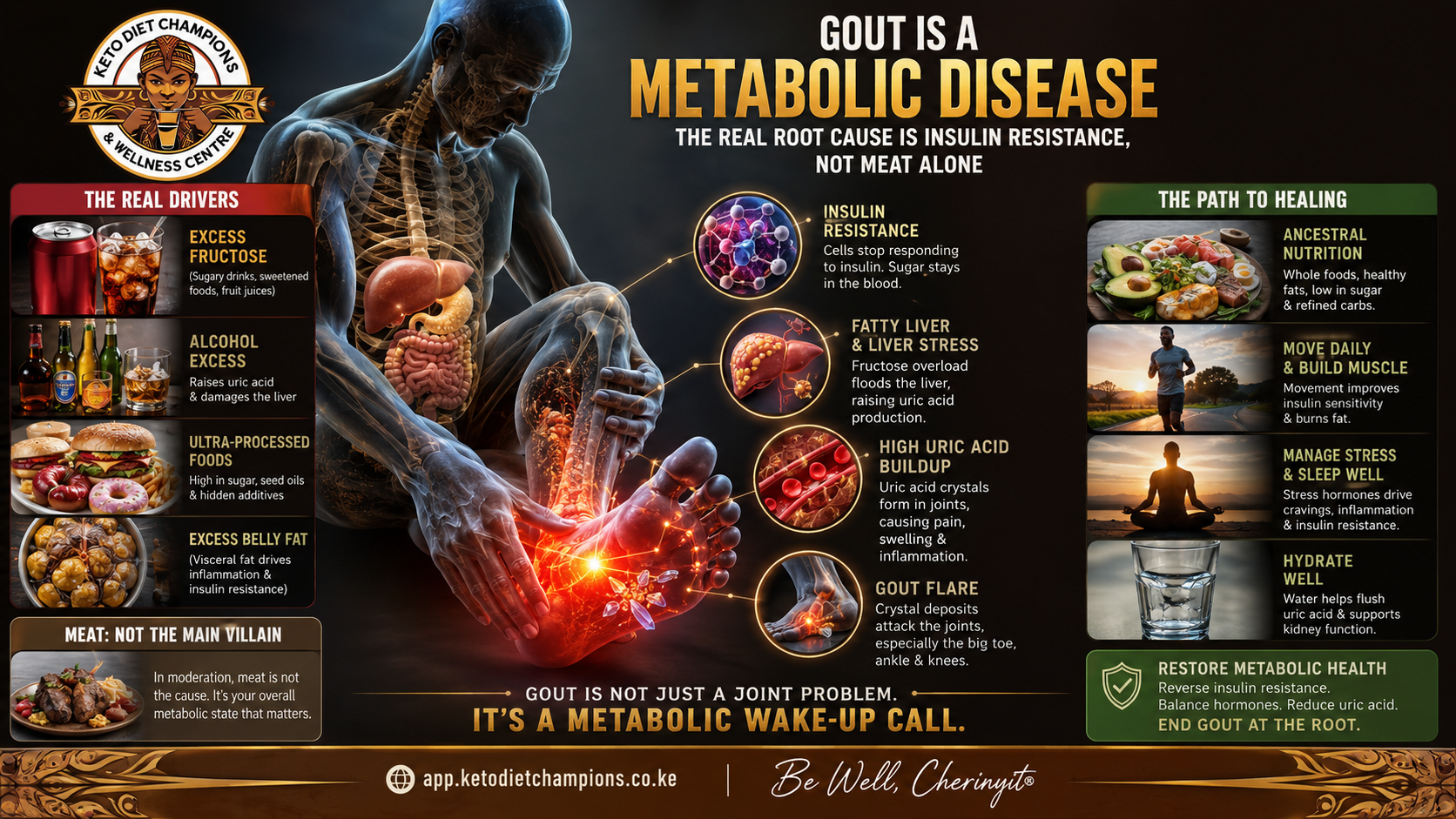
Gout is often blamed on meat, but that story is incomplete. In reality, gout is usually a sign of deeper metabolic dysfunction — especially insulin resistance, excess sugar intake, fructose overload, alcohol excess, and impaired uric acid handling.
Korir Cherinyit
Friday, 3 July 2026
Gout Is a Metabolic Disease, Not a Meat Disease
*Cherinyit
July 03, 2026*
Introduction: Why Gout Is Misunderstood
For many years, people with gout have been told to fear red meat, shellfish, and other “high-purine” foods as though these foods were the main cause of their pain. That explanation sounds simple, but it misses the larger biological reality. Gout is not merely a food problem. It is a metabolic problem.
In the clinic, gout rarely arrives alone. It often travels with excess weight, high blood pressure, prediabetes, Type 2 diabetes, fatty liver tendencies, and poor energy regulation. That pattern matters because it points to a common underlying issue: metabolic dysfunction. When the body’s handling of insulin, sugar, uric acid, and inflammation is disturbed, gout becomes far more likely.
The Real Root Cause of Gout
Gout develops when uric acid becomes too high in the blood and forms crystals in the joints, usually causing intense pain, swelling, and inflammation. But high uric acid does not happen in isolation. It is often the result of a body that is no longer metabolically efficient.
Insulin resistance plays a central role. When insulin is chronically elevated, the kidneys tend to excrete less uric acid. At the same time, the liver may produce more uric acid under the stress of excess fructose, alcohol, and poor fuel metabolism. That is why gout is so closely linked with metabolic syndrome, obesity, and blood sugar problems.
This is also why blaming meat alone is misleading. A person can remove steak from the plate and still have gout if the deeper drivers remain untouched. If sugar, refined carbohydrates, alcohol, and chronic metabolic stress are still present, the uric acid problem often remains.
The Number 1 Driver: Fructose, Not Meat
The number one dietary driver of gout is not meat. It is fructose, especially when it is consumed in excess through sugary drinks, sweetened juices, packaged snacks, desserts, and ultra-processed foods. Fructose is metabolized primarily in the liver, where it is rapidly converted through pathways that can increase uric acid production.
Unlike glucose, fructose is handled almost entirely by the liver. During its metabolism, it is converted into fructose-1-phosphate, which can then contribute to the production of inosine monophosphate and eventually uric acid. This is one of the main reasons excess fructose is so strongly linked with gout, fatty liver disease, and insulin resistance.
This is why fructose-rich foods and drinks deserve far more attention than meat in the modern gout conversation. Meat may contain purines, but fructose has a more direct and powerful effect on uric acid generation in the liver, especially when metabolic health is already impaired.
Why Meat Gets Blamed
Meat contains purines, and purines can contribute to uric acid production. But purines are only one small part of the picture. In modern life, the bigger forces driving gout are sugar, fructose-containing drinks, ultra-processed foods, alcohol, and insulin resistance.
Historically, gout was known as the “disease of kings.” That title did not exist because of meat alone. It reflected a lifestyle of excess: rich feasting, wine, sweet foods, and indulgence. The deeper issue was not one food; it was the overall metabolic burden of a lavish lifestyle.
That historical lesson still applies today. Modern versions of the same problem include soda, sweetened juices, packaged snacks, desserts, beer, and constant carbohydrate overload. The trigger may be a meal, but the root cause is usually a long-standing metabolic imbalance.
Fructose, Alcohol, and Uric Acid
Fructose and alcohol share striking similarities in how they affect the liver. Both are processed primarily by the liver. Both can bypass the usual early regulatory steps that help control energy metabolism. Both can push the liver toward triglyceride production, fatty liver, insulin resistance, and higher uric acid levels.
This is one reason sugary drinks and frequent alcohol intake can be so harmful in gout. Fructose can raise uric acid production quickly, and alcohol can reduce uric acid excretion while also increasing metabolic stress. Together, they create the kind of internal environment where gout thrives.
That is why the emphasis must be on excess. The problem is not a whole fruit eaten in its natural form, and it is not necessarily an occasional drink in a healthy person. The problem is repeated high exposure to liquid sugar, sweetened foods, and frequent alcohol consumption. Those habits steadily damage metabolic health over time.
Why the Body Reacts This Way
Uric acid is not just a random waste product. It is tightly tied to energy metabolism, kidney handling, liver function, and inflammation. When the body is under metabolic stress, uric acid rises more easily and clears less efficiently.
This helps explain why gout often appears alongside high blood pressure and blood sugar problems. These are not separate diseases randomly appearing together. They are connected expressions of the same underlying metabolic dysfunction. If the fuel system is broken, the joints often become one of the places where the damage shows up.
Ancestral Wisdom and Metabolic Healing
From an ancestral perspective, gout makes sense as a disease of modern excess. Human beings did not evolve on sugary drinks, industrial snacks, refined flour, and constant metabolic overload. We evolved on real food, seasonal eating, and simpler patterns that did not force the liver and kidneys to deal with endless sugar stress.
That is why the ancestral-keto approach can be so powerful. When sugar and refined carbohydrates are removed, insulin levels improve, inflammation often drops, and uric acid handling may become more stable. In practical terms, this means focusing on real foods, reducing the metabolic burden, and giving the body a chance to recover.
At Keto Diet Champions & Wellness Centre, this is the framework we use. We do not merely tell people what to avoid. We help them understand why the body is reacting the way it is, and we guide them back toward a more natural, sustainable pattern of eating and living.
Our Experience at Keto Diet Champions & Wellness Centre
As a wellness coach at Keto Diet Champions & Wellness Centre for over two years, I have worked with many members living with gout, elevated uric acid, weight gain, high blood pressure, prediabetes, and long medication histories. What I have seen repeatedly is that meaningful improvement begins when we stop chasing symptoms and start correcting the terrain.
When members reduce sugar, refined carbs, alcohol, and processed foods, and begin following a low-carb or ketogenic structure, their health markers often improve in a noticeable way. Some lose weight. Some normalize blood pressure. Some see blood sugar improve. Others report fewer gout flares and greater day-to-day comfort. In a number of cases, members have reversed metabolic conditions and, under proper clinical supervision, stopped medication.
This is why I remain committed to the root-cause approach. Real healing does not come from food fear. It comes from metabolic repair.
What Actually Helps
If you are struggling with gout, the most important question is not “Which meat should I avoid?” but “What is driving my uric acid up?”
The common drivers include:
When those factors are addressed, the body often becomes better at regulating uric acid. For many people, this means fewer attacks, less inflammation, and better overall health. Meat does not deserve the blame it has been given. The metabolic environment does.
Final Word
Gout is not simply a meat problem. It is a warning sign that the body’s metabolism is under strain. If you only remove steak, you may miss the real cause. If you correct insulin resistance, reduce fructose and alcohol excess, and rebuild your food pattern around real nourishment, the body often responds well.
At Keto Diet Champions & Wellness Centre, our work is built on that principle: fix the root cause, and the symptoms often begin to fade.
Book your personalised wellness plan today at app.ketodietchampions.co.ke and begin your root-cause healing journey.
Disclaimer
This article is for educational purposes only and is not intended to diagnose, treat, cure, or prevent any disease. It should not replace personalised medical advice from a qualified healthcare professional. If you have gout, high uric acid, kidney disease, diabetes, liver disease, or are taking medication, consult your clinician before making major dietary changes.
Be Well,
Cherinyit®
Ancestral Healing & Ketogenic Diet Practitioner
Keto Diet Champions & Wellness Centre
Ready to Start?
Book a consultation today
Take the first step toward your health transformation with a KSh 300 consultation.
Book Now →