Hydration on Ancestral Keto: Why Water Alone Is Not Enough
Hydration on ancestral keto is not just about drinking more water. It is about understanding how the kidneys, sodium, potassium, magnesium, and heat exposure work together to keep the body electrically stable. For Kenyan readers transitioning to low-carb eating, especially in hot weather or during exercise, learning this balance can mean the difference between keto flu and a smooth, energised adaptation.
Korir Cherinyit
Saturday, 16 May 2026
Hydration on Ancestral Keto: Why Water Alone Is Not Enough
Kenyan low-carb hydration guide | Keto flu relief | Electrolytes on ancestral keto | Hot-weather hydration Kenya
By Cherinyit, Founder & Director, Keto Diet Champions & Wellness Centre, Eldoret, Kenya
Most people think hydration is just about drinking water. That is only half the story. The deeper truth is that your body does not run on water alone; it runs on a carefully balanced electrical system controlled by the kidneys, hormones, minerals, and the food you eat.
That is why a Kenyan who begins ancestral keto can feel both better and worse at the same time: better energy and less hunger on one side, but headaches, cramps, low energy, poor sleep, and dizziness on the other if electrolytes are not handled properly. In the first few days or weeks, many people are not “failing keto” at all — they are simply adjusting to a new fluid and mineral balance.
At Keto Diet Champions & Wellness Centre, we have walked this road with hundreds of clients who came in confused, exhausted, discouraged, and sometimes ready to quit. Many were not lacking discipline. They were lacking guidance, structure, and a better understanding of how the body adapts when carbs drop. That hands-on experience has taught us something important: when people understand hydration and electrolytes properly, keto becomes far easier, safer, and more sustainable.
For readers in Eldoret and across Kenya, this issue is practical, not theoretical. We live in heat, we walk, farm, cycle, work long hours, and many of us are trying to move from a refined-carb lifestyle to a more ancestral way of eating. If you do not understand hydration properly, you can mistake a mineral problem for hunger, illness, or even failure.
The real job of the kidneys
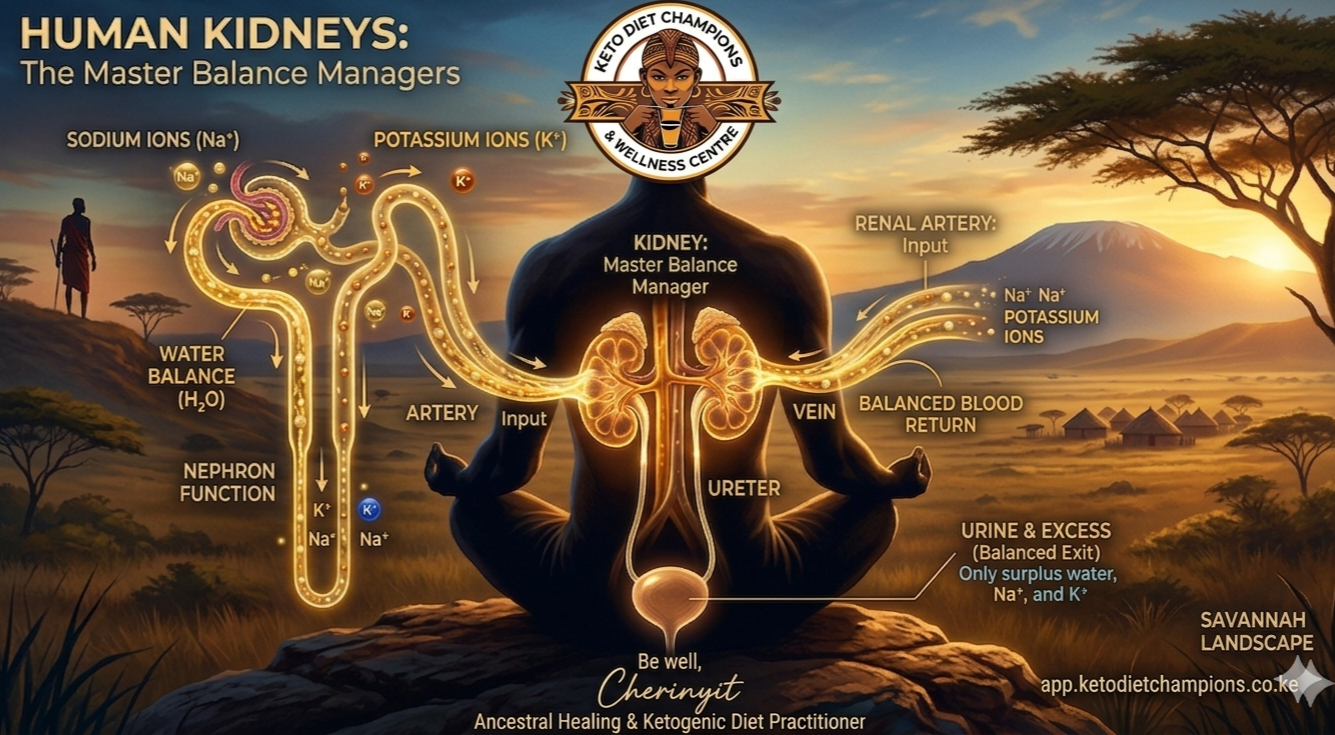
Most people were taught that kidneys are mainly waste-removal organs. That is too small a view. The kidneys are not just filters; they are balance managers, constantly deciding how much sodium, water, potassium, and other minerals to keep or release.
This matters because hydration is not only about how much water enters the mouth. It is about where that water goes, whether sodium is holding it in place, and whether the cell membranes can keep the body electrically stable. When this balance shifts, symptoms appear quickly.
The kidney’s real job is homeostasis. Every second of every day, it fine-tunes the body’s internal balance so the heart can beat, the brain can think, and the muscles can work well.
Why keto flu happens
When carbohydrate intake drops, insulin drops too. Lower insulin tells the kidneys to stop holding onto sodium so tightly, and sodium begins to leave the body more easily in urine. Water follows salt, which is why many people pee more, lose water weight rapidly, and then suddenly feel tired, weak, or headachy.
That early transition is often called keto flu, but it is not a virus and it is not a mysterious disease. It is usually a mineral and fluid shift that has not been managed properly.
This is one reason our clients often say, “I thought keto was not working for me.” In reality, the body was just asking for the right support.
How thirst changes
Once someone becomes fat-adapted, thirst often becomes less obvious. That does not mean the body needs less water in every situation. It means the signal is quieter, especially when the person is busy, fasting, working outdoors, or exercising in heat.
This is important in Kenya, where people cycle, walk, farm, commute, and train under warm conditions. By the time thirst becomes strong, dehydration may already have started, especially if sweat losses are high. The lesson is simple: do not wait for thirst alone.
Hydration is not just how much water you drink; it is where that water goes.
Why water alone can mislead
Sweat is not just water. It also carries sodium, chloride, potassium, and small amounts of other minerals. If you replace sweat with only plain water, you may dilute the body rather than restore it.
That is why some people feel worse after drinking large amounts of plain water during heat or exercise. In severe cases, over-drinking plain water can contribute to exercise-associated hyponatremia, where blood sodium falls too low. For the ancestral keto eater, this risk deserves attention because sodium loss is already easier when insulin is low.
The fix is not complicated. Drink water, yes — but drink it intelligently.
What changes on ancestral keto
An ancestral keto body usually carries less glycogen, and glycogen holds water. As carbs fall, stored glycogen falls too, and water leaves with it. That is one reason the scale drops quickly in the first week.
At the same time, lower insulin changes kidney sodium handling. The body becomes more efficient, but also more sensitive to sodium loss when sweating, fasting, or moving through hot weather. In simple terms, the body becomes lighter, but the margin for sloppy hydration narrows.
This is not a weakness. It is a new operating system.
What changes on a refined-carb diet
A standard highly refined-carb diet tends to produce higher and more frequent insulin signals. That encourages the kidneys to hold onto sodium more strongly, and water often follows. The body may appear to be “better hydrated,” but in reality it is often holding more fluid under hormonal pressure.
That means people on refined carbs can carry more glycogen and more water, while also missing minerals in the background. When they suddenly cut carbs, the water and sodium drop quickly, and the transition feels dramatic. Keto did not create the problem; it exposed it.
This is why many people feel the contrast so sharply during the first week of low-carb eating.
The mineral trio that matters most
Sodium is the first mineral to respect on low-carb or ancestral keto. It helps maintain blood volume, blood pressure, and fluid balance. If sodium is too low, people often feel flat, dizzy, or crampy.
Potassium sits mostly inside the cells and helps with muscle contraction and relaxation. Magnesium supports energy production, nervous system calm, and muscle function. When the three are out of balance, symptoms can look like keto flu, but the real issue is electrical instability.
Think of sodium as the fluid manager, potassium as the internal cell stabiliser, and magnesium as the calming mineral that keeps the system from overreacting.
Kenyan foods that support balance
This is where ancestral eating shines. Traditional Kenyan foods can support hydration far better than commercial drinks when used properly. Bone broth, salted soup, nyama choma, fish, eggs, managu, sagaa, and avocado all fit naturally into this approach.
Managu is especially useful because it is widely described as nutrient-rich and a source of useful minerals, including calcium and magnesium-supporting nutrients. A Kenyan keto plate does not need to be imported, powdered, or artificial to be effective.
Real food works because it brings minerals in a form the body understands.
Hot weather and exercise
In heat, hydration must be proactive. A fat-adapted person may not feel thirsty quickly, yet can still lose significant fluid through sweat. If you are cycling, farming, walking long distances, or training in warm weather, plan hydration before the session rather than reacting after symptoms begin.
A good rule is to sip fluids steadily during longer efforts and include sodium, not just water. That helps preserve blood volume and supports performance. For rides, walks, or long work periods, salted water or broth is often more useful than plain water alone.
This matters especially for active people in Eldoret and other Kenyan towns where outdoor work and exercise are part of daily life.
Testing guidance
If symptoms persist despite better food and salt, testing can help. Serum magnesium is commonly used, but it does not always reflect total body stores well because much magnesium is inside cells, not in blood. RBC magnesium can be more useful when deficiency is suspected but serum results look normal.
Potassium and sodium should also be interpreted carefully, especially in people with kidney disease or on medications that affect fluid balance. If you have palpitations, severe weakness, fainting, confusion, or vomiting, medical care is needed.
A lab test is useful, but symptoms also matter. Do not dismiss what your body is telling you.
Safety notes
Do not self-prescribe potassium supplements aggressively. Potassium is useful, but too much can be dangerous, especially if kidneys are not functioning well or if you take certain blood pressure medicines. Food first is usually the safest path.
Magnesium supplements are often better tolerated than potassium, but they still need common sense. If you are already having severe symptoms, or if you have heart or kidney concerns, discuss this with a clinician before making major changes.
Ancestral keto should heal, not create new problems.
Why we wrote this
At Keto Diet Champions & Wellness Centre, we have spent real time with real people who came in carrying the same pattern: they had tried keto, felt terrible, blamed themselves, and almost gave up. Over time, we learned that many of those struggles were not about weakness, but about missing guidance around fluids, minerals, and transition.
That is why we share this kind of education with confidence and empathy. We want you to understand your body, not fear it. We want you to know that keto flu is often manageable, and that with the right support, many people move through it successfully and stay consistent long enough to see real healing.
Final word
Hydration on ancestral keto is not about chasing litres of water. It is about managing the electrical and mineral system that allows water to be used properly. Once Kenyan readers understand that, the early keto transition becomes easier, hot-weather exercise becomes safer, and ancestral eating becomes more sustainable.
For your audience, the message is clear: respect salt, choose real food, hydrate with intelligence, and let the kidneys do their work without forcing the body into imbalance.
Want support with your own keto transition, electrolyte symptoms, or ancestral diet plan? Book a consultation with Keto Diet Champions & Wellness Centre through our website at app.ketodietchampions.co.ke and let us help you move from confusion to clarity.
Follow us: X @KDC_Wellness | Facebook: Keto Diet Champions & Wellness Centre
Be well,
Cherinyit
Ancestral Healing & Ketogenic Diet Practitioner
Founder, Keto Diet Champions & Wellness Centre
We help you stop living with chronic illness.
Disclaimer
This article is for educational purposes only and is not a substitute for medical advice, diagnosis, or treatment. People with kidney disease, heart disease, high blood pressure, diabetes, or those taking medications that affect fluids or electrolytes should consult a qualified health professional before changing salt, fluid, or supplement intake. If you have severe weakness, chest pain, fainting, confusion, or persistent vomiting, seek medical care promptly.
*
Ready to Start?
Book a consultation today
Take the first step toward your health transformation with a KSh 300 consultation.
Book Now →