SKIP MORNING BREAKFAST AND THANK ME LATER
I once proudly embraced the mantra “Eat breakfast like a king,” and it crowned me the king of weight instead—my weight shot from 78 kg to 110 kg, clinically obese by any standard.
Elisha Kutto
Thursday, 4 June 2026
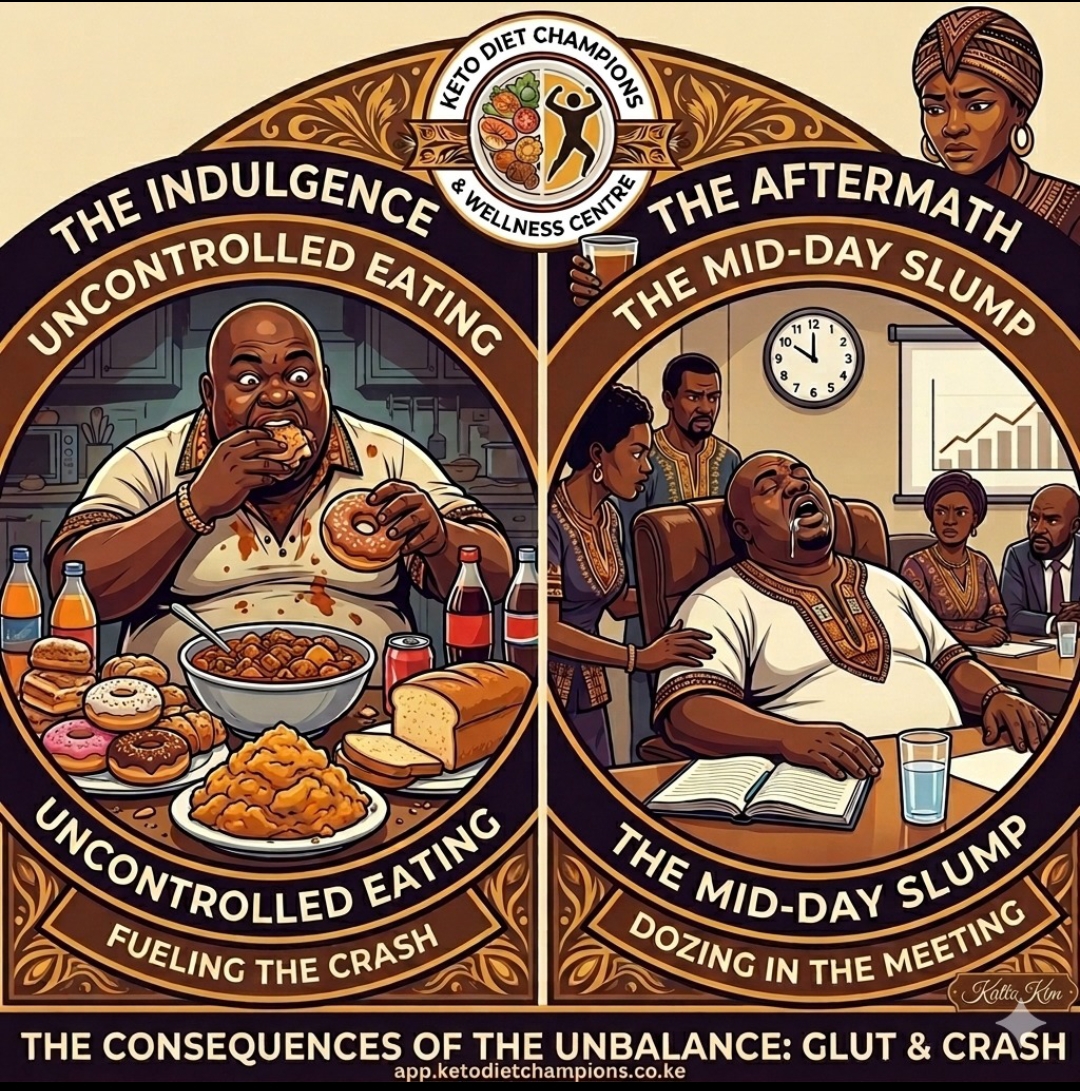
I once proudly embraced the mantra “Eat breakfast like a king,” and it crowned me the king of weight instead—my weight shot from 78 kg to 110 kg, clinically obese by any standard. I genuinely believed I was fueling my body for energy, even taking ugali in the morning, only to realize I was getting the opposite result. I see the same pattern daily: people start with tea and bread, pancakes, doughnuts or andazi, yet by mid-morning they are hungry again, reaching for more tea and a snack, and by lunchtime they are first in the buffet line—with portions that never shrink. In meetings, those who have had a hearty breakfast, a mid-morning snack and a heavy lunch often become sluggish and unproductive in the afternoon, dozing off despite having eaten “for energy”—a clear sign that frequent high-carb meals are spiking their blood sugar and crashing their energy instead of sustaining it.
Our body Physiology says otherwise- Morning breakfast the most useless meal of the day
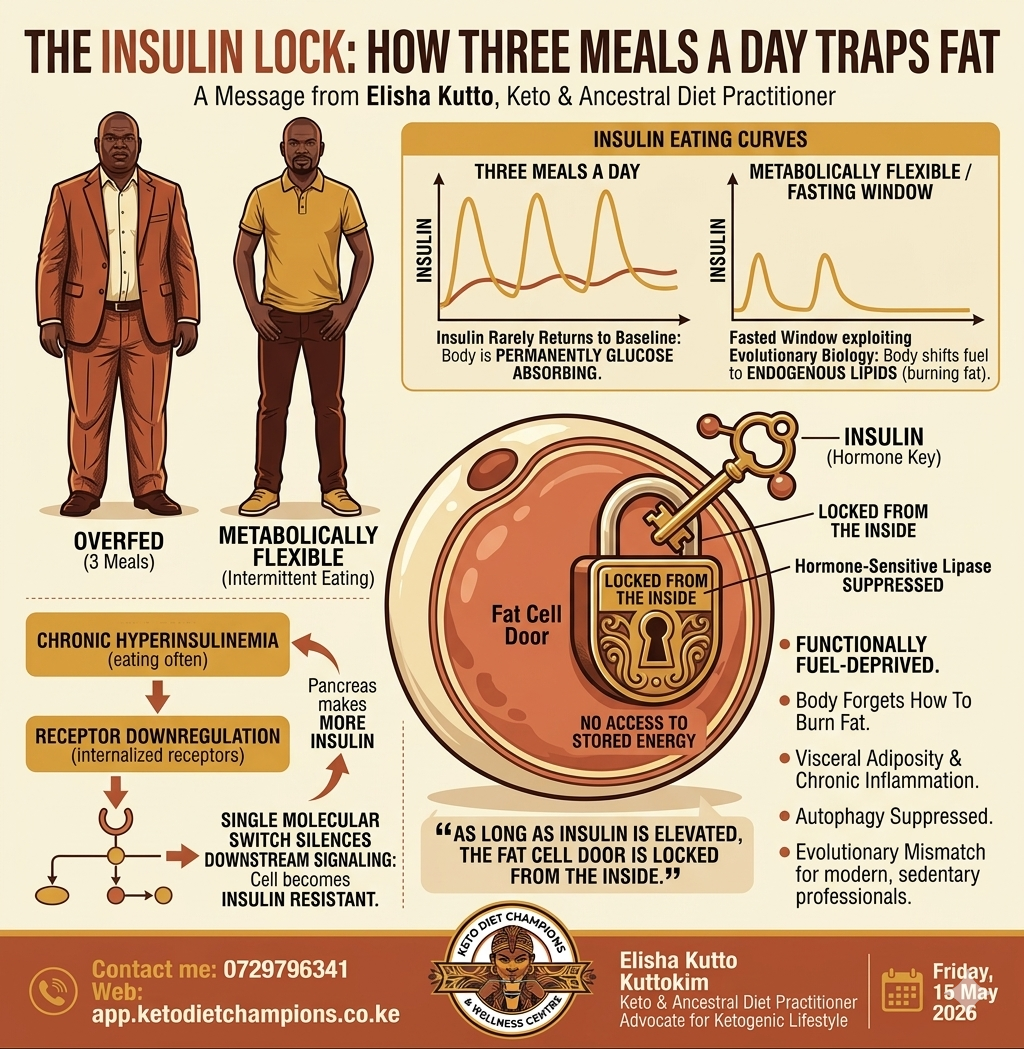
It is simply not necessary to eat the minute we wake up. We imagine the need to “fuel up” for the day ahead. However, our body has already done that automatically. Every morning, just before we wake up, a natural circadian rhythm jolts our bodies with a heady mix of growth hormone, cortisol, epinephrine and norepinephrine (adrenalin). This cocktail stimulates the liver to make new glucose, essentially giving us a shot of the good stuff to wake us up. This effect is called the dawn phenomenon, and it has been well described for decades. Many people are not hungry in the morning-even our children don’t like eating in the morning either. The natural cortisol and adrenalin released stimulates a mild flight-or-fight response, which activates the sympathetic nervous system. Our bodies are gearing up for action in the morning, not for eating. All these hormones release glucose into the blood for quick energy. We’re already gassed up and ready to go. There is simply no need to refuel with sugary cereals and bagels. Morning hunger is often a behavior learned over decades, starting in childhood.
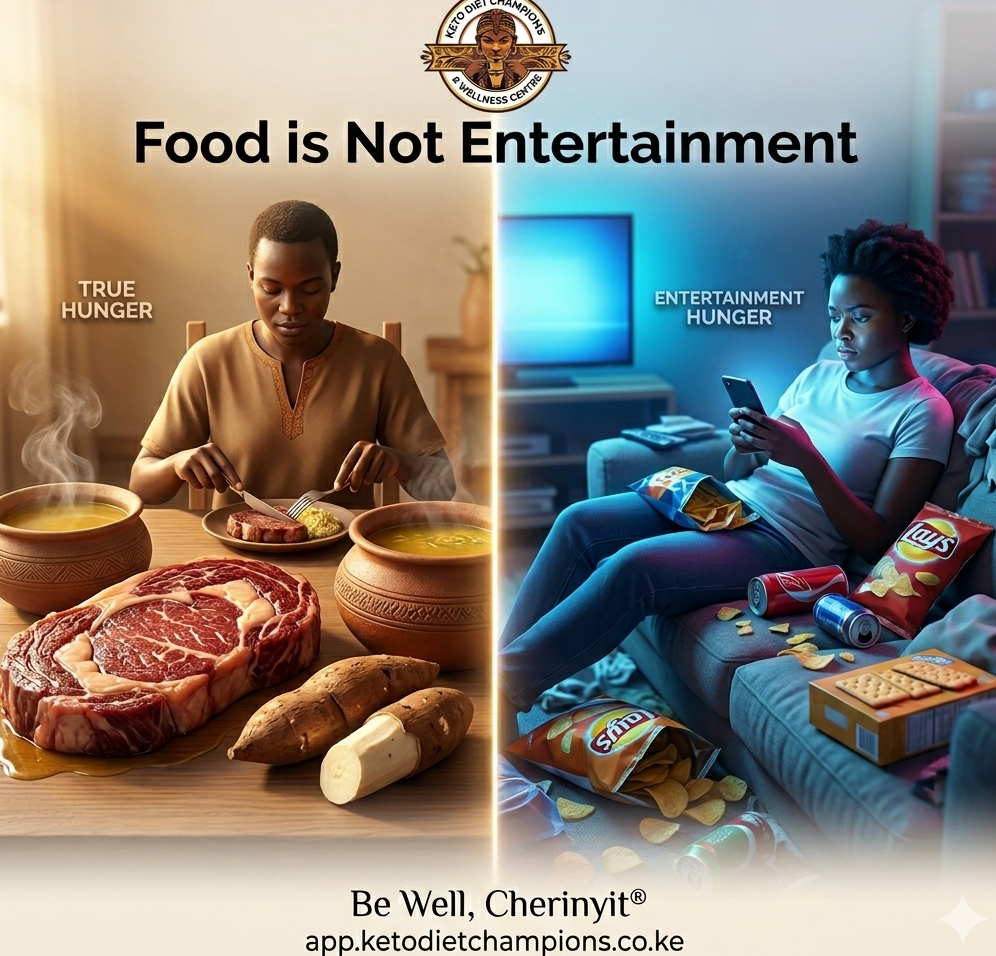
The word breakfast literally means the meal that breaks our fast, which is the period when we are sleeping and therefore not eating. If we eat our first meal at 12 noon, then grilled salmon salad will be our “break fast” meal— and there’s nothing wrong with that. A large breakfast is thought to reduce food intake throughout the rest of the day. However, such does not always seem to be the case.Studies show that lunch and dinner portions tend to stay constant, regardless of the amount of calories taken at breakfast. The more one eats at breakfast, the higher the total caloric intake over the entire day. Worse, taking breakfast increases the number of eating opportunities in a day. Breakfast eaters therefore tend to eat more and eat more often—a deadly combination. Furthermore, many people confess that they are not hungry first thing in the morning and force themselves to eat only because they feel that doing so is the healthy choice. As ridiculous as it sounds, many people force themselves to eat more in an effort to lose weight.
In 2014, a sixteen-week randomized controlled trial of breakfast eating found that “contrary to widely espoused views this had no discernable effect on weight loss.
”We are often told that skipping breakfast will shut down our metabolism. The Bath Breakfast Project, a randomized controlled trial, found that “contrary to popular belief, there was no metabolic adaptation to breakfast.” Total energy expenditure was the same whether one ate breakfast or not. Breakfast eaters averaged 539 extra calories per day compared to those that skipped breakfast—a finding consistent with other trials. The main problem in the morning is that we are always in a rush. Therefore, we want the convenience, affordability and shelf life of processed foods. Sugary cereals are the kings of the breakfast table, with children as the primary target. The vast majority of children regularly eat sugary cereals. By contrast, small percentage regularly eat eggs at breakfast. Other easy-to-prepare foods like toast, bread, sugary yogurts, Danishes, pancakes, donuts, muffins, instant oatmeal and fruit juice are also popular. Clearly, the cheap refined carbohydrate reigns supreme here.
Breakfast is the most important meal of the day—for Big Food Companies. Sensing the perfect opportunity to sell more highly profitable, highly processed “breakfast” foods, Big Food circled the easy money like sharks on wounded prey. “Eat breakfast!” they thundered. “It’s the most important meal of the day!”. This is where our problems began.
For more conversations like this, visit: app.ketodietchampions.co.ke
KuttoKim- Keto & Ancestral Diet Practitioner/Advocate for Ketogenic Lifestyle
Ready to Start?
Book a consultation today
Take the first step toward your health transformation with a KSh 300 consultation.
Book Now →